

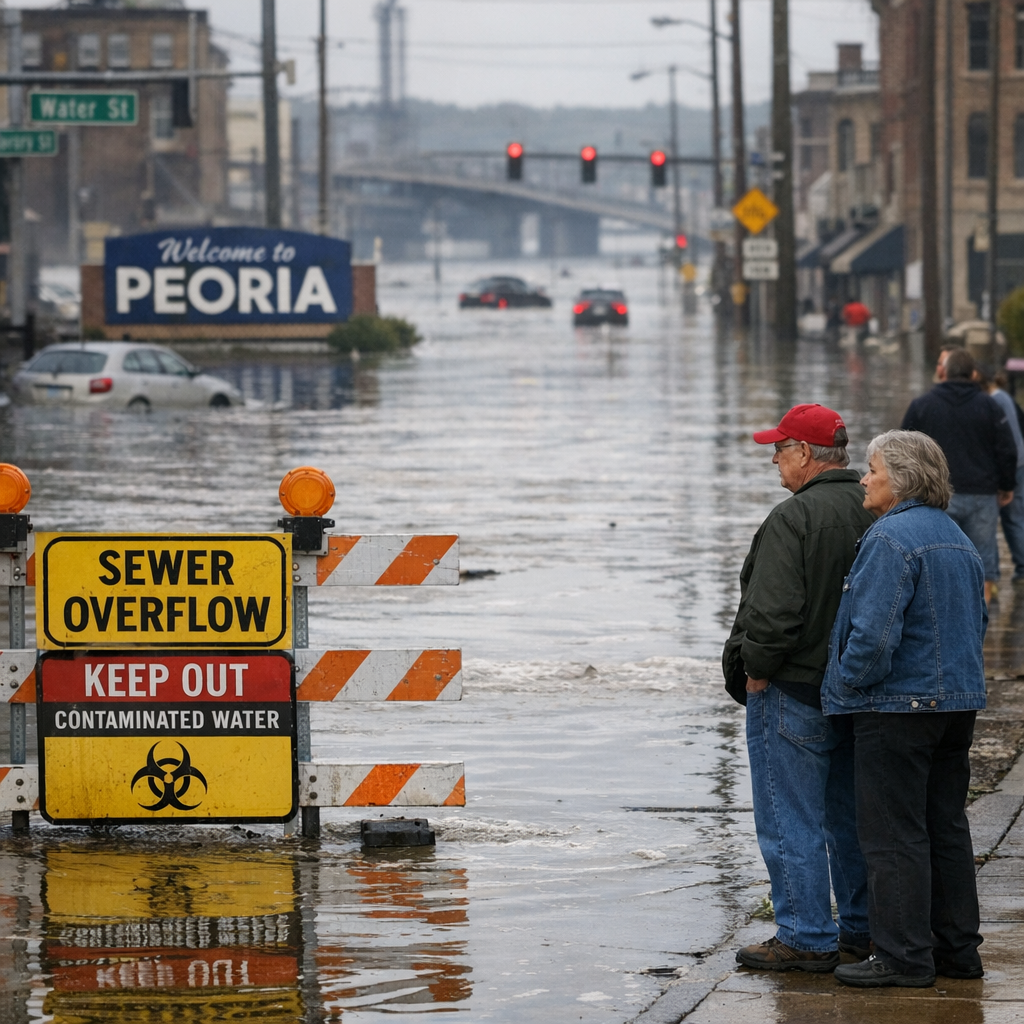
Peoria’s combined sewer system, which carries both stormwater and wastewater, faces significant challenges during heavy rainfall. The system often becomes overwhelmed, resulting in untreated sewage discharging into the Illinois River. This phenomenon, known as Combined Sewer Overflow (CSO), poses health risks and environmental concerns for the community.
Understanding Combined Sewer Overflows
In older parts of Peoria, the sewer infrastructure is designed to handle both stormwater and wastewater. While this system functions adequately during dry weather, heavy rains can exceed its capacity, leading to overflows. These events can occur 20 to 30 times annually, introducing pollutants into the river and affecting water quality. Residents are advised to avoid full-body contact with the Illinois River downstream from Detweiller Marina during such periods to prevent potential health issues. Learn more about Peoria’s stormwater challenges.
Health and Environmental Impacts
CSO events can introduce harmful bacteria and pollutants into the Illinois River, posing risks to both human health and aquatic life. Activities such as swimming, jet skiing, or water skiing in affected areas can lead to illness if contaminated water is ingested. The city has issued warnings following heavy rainfall, advising residents to avoid contact with the river during these times. Read more about recent CSO warnings.
City Initiatives and Community Involvement
To address these challenges, Peoria is implementing projects aimed at reducing CSOs in compliance with the Clean Water Act and the CSO Consent Decree. These efforts include infrastructure improvements and the adoption of green solutions to manage stormwater more effectively. Community involvement is crucial in these initiatives. Residents can participate by staying informed, reporting issues through platforms like Peoria Cares, and supporting local policies focused on sustainable water management. Learn how to report concerns with Peoria Cares.
By understanding the implications of CSOs and actively participating in mitigation efforts, Peoria residents can contribute to a healthier environment and improved quality of life for the community.